
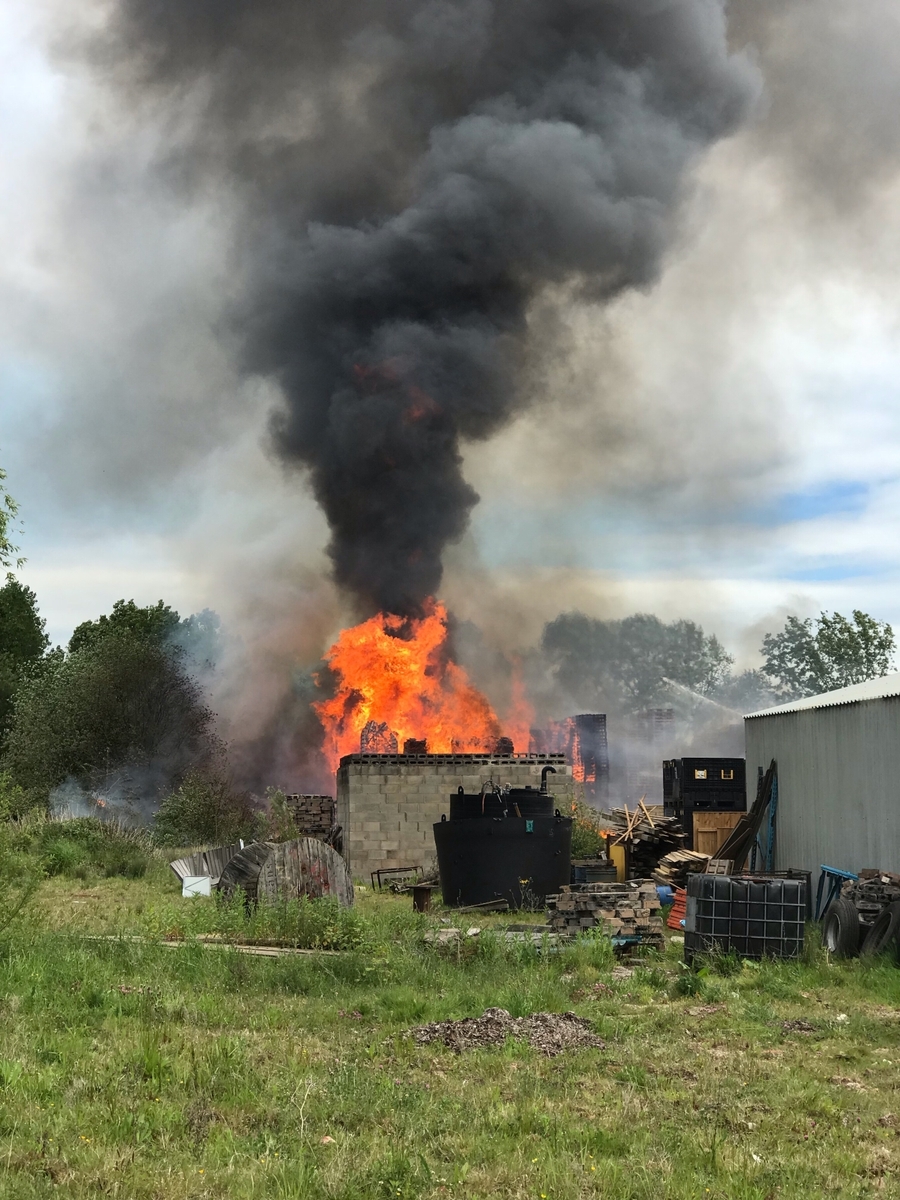
UK Fire Weather Conditions Persisting as Wildfires break out in Town and Country
Author
David Kempster
Date Published
A new term was added to the media climate change lexicon this week as extreme heat weather conditions persist across much of the UK. Journalists are now referring to being in the grip of a “firewave” as the ideal conditions are now in play for Fire Weather, that enables wildfire risk.
While “Firewave” is a headline grabber, it gives the sense that this is an organised line of fires marching across the country. But this is not the case and, in many cases, especially as we have seen in France, many are created by human activity, whether accidental or deliberate. But some can also be because infrastructure fails, creates electrical sparks, which can trigger localised fires.
In such tinder-dry conditions, discarded litter, cigarette butts, even foil or bottles that channel the sun’s rays, can ignite parched grasses and bushes, wherever they are. Add high air temperatures and wind, then the Fire Weather conditions that we have seen over recent weeks will do the rest.
Wildfires across wide range of Terrain
What has been striking has been the variety of locations, with some on remote moorlands and mountains, but others closer to or inside urban areas, along railway lines and fields adjacent to homes, risking assets and health.
Claire Belcher, Director of the Wildfire Lab at the University of Exeter, said: “This ongoing ‘firewave’ is the most widespread that the UK has seen. We’ve had lots of fires in certain regions before, but we’ve never seen fires burning right across the country like this.”
By Monday 13th July, the National Fire Chiefs Council said emergency services were dealing with 19 wildfires.
Residents were evacuated from near to the Conwy Mountain in North Wales, as fire advanced towards homes and the sky was thick with smoke. Greater Manchester Fire and Rescue Service was called to a moorland fire near the Dovestone Reservoir.
Strong winds blew smoke from the fire over a long, with Manchester residents labouring under hot, hazy sunshine and smoky skies. It has since transpired that, like with some French wildfires, the Dovestone Reservoir one was set deliberately and a person arrested for suspected arson.
With high temperatures already potentially accounting for 2,700 excess deaths in June, wildfire pollution adds another layer of risk vulnerable populations. Added to high temperatures and high pressure weather systems, air quality can deteriorate significantly, increasing respiratory and cardiovascular risks.
Fires break out across the Capital
In London, wildfires broke out in the heart of densely packed neighbourhoods along transport infrastructure. A blaze destroyed six gardens in Bellingham in the Borough of Lewisham to the south-east of the capital, while a blaze destroyed a brick outbuilding, which contained cylinders that needed to be cooled at a hotel in Rainham in Havering in East London.
The London Fire Brigade have urged residents to create firebreaks around their gardens, especially those backing onto areas of vegetation and along linear infrastructure, such as railway lines.
It came after a major blaze broke out in Walthamstow on the evening of Sunday 12th July. One house, and six gardens with outbuildings and studios, were left devastated, as trees along the embankment of the Weaver rail line, part of the London Overground network, caught fire in a matter of minutes.
One resident lost all their family heirlooms in the fire, which with a tragic irony were being stored in their garden studio while they were renovating their house, which remained untouched.
Investigations are still ongoing as to the cause of the Walthamstow fire, but overheating rail infrastructure, whether electrical circuitry, or the combination of reflective heat from rails and litter, could be to blame. The impact on human lives is dramatic, as well as the disruption caused by the closure of a busy transport link in the capital.
Mapping Fire Weather Risk
With more heatwaves forecast towards the end of July and no obvious rain in sight, Fire Weather conditions look set to persist. Whether wildfires are started deliberately or through overheating of infrastructure or materials, the proximity to communities remains the greatest concern.
A lesser-known fact is that some 1.8 million people live on what it called the “Rural-Urban Interface”, the edges of our villages, towns and cities that butt up against the countryside. This, together with urban parks, rail embankments and scrub wasteland, all form areas of elevated risk.
This changed climate that we are all experiencing now, is a stepping stone to far worse Fire Weather conditions, and we must be ever more concerned about how wildfires could impact our homes, businesses and livelihoods.
This is at the heart of Terra IQ’s mission: to identify how Fire Weather conditions, among a range of climate risks, could impact property and communities in the coming decades.
Our unique Fire Weather dataset identifies how our climate could impact across the country up to 2080 using ground-breaking 2.2km resolution squares. We are working with environmental data businesses to enhance their climate analysis for property transactions, as well as insurers and lenders.
Here is more information about our Fire Weather Dataset, or get in touch to arrange a demo.